

Dental Emergency: What to Do Before Reaching Our Emergency Dentist in Chilliwack
By Bhavesh Gabani • August 7, 2026
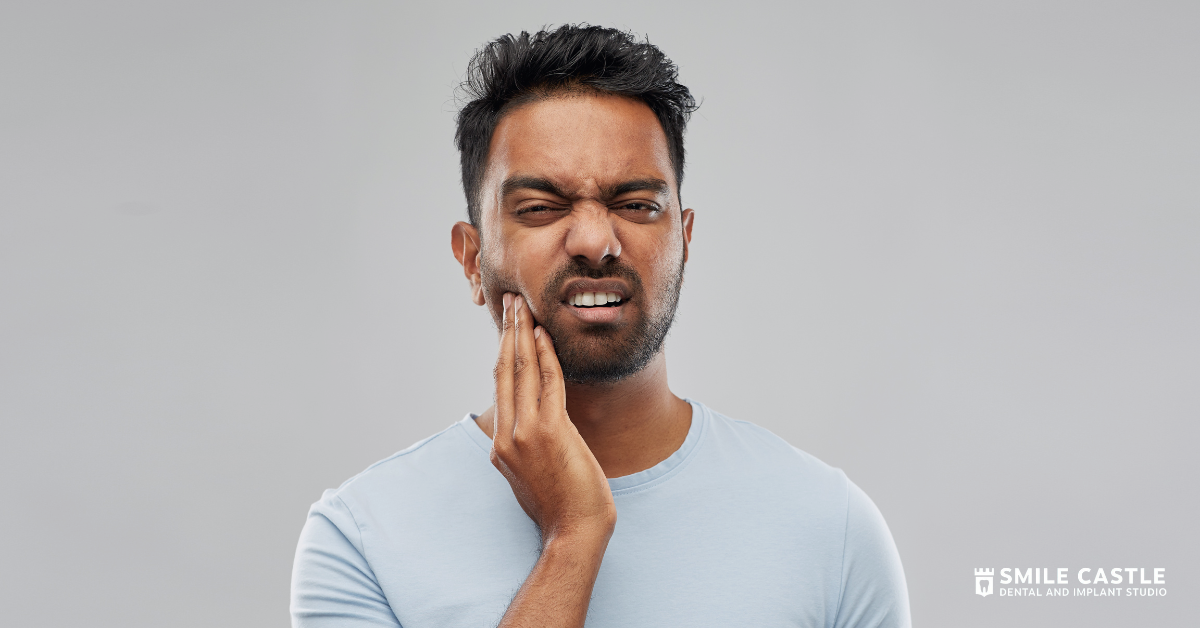
A dental emergency can happen in seconds—a sudden toothache that won’t go away, a broken tooth during dinner, or a knocked-out tooth from a sports injury. In those moments, it’s easy to panic or wonder if you should head straight to the dentist, try a home remedy, or wait and see if the pain goes away.
The truth is, what you do before you get to the dental clinic can make a big difference. Taking the right first-aid steps can help save your tooth, reduce the discomfort, and improve the chances of successful treatment. Delaying care or trying the wrong home remedy can make things worse.
If you’re looking for an emergency dentist in Chilliwack, this article will help you know what to do from the moment a dental emergency happens until you get to Smile Castle Dental and Implant Studio. You’ll also learn what to avoid, when to go to the hospital, and how to prepare for your visit.
Important: This article is for educational purposes only and is not a substitute for professional dental or medical advice. If you’re having trouble breathing, trouble swallowing, severe facial trauma, or uncontrolled bleeding, seek emergency medical care immediately.
Quick Answer: Which Is Better: Dental Implants or Dentures in Chilliwack?
For many patients, dental implants may be the more durable long-term solution, as they can mimic natural tooth function and help preserve the jawbone. However, dentures are an excellent option for many patients, depending on their clinical needs, health, and personal preferences.
The right treatment depends on:
- Your oral health and overall health
- Bone volume and sufficient jawbone density
- Number of missing teeth
- Your budget and treatment goals
- Your dentist’s recommendation after a consultation
At Smile Castle Dental and Implant Studio, our team will evaluate your smile and recommend the treatment that’s best for you.
QUICK ANSWER
What Should You Do Before Seeing an Emergency Dentist in Chilliwack?
If you need an
emergency dentist in Chilliwack, stay calm and call the clinic as soon as possible. Follow any instructions you’re given, control bleeding with clean gauze, use a cold compress to reduce swelling, and protect any damaged or knocked-out tooth by handling it carefully and keeping it moist. Avoid home remedies that can make things worse, and get professional care as soon as possible to improve the chances of a good outcome.
In this article:
- Preserve Bone: Unlike removable dentures, implants stimulate the jawbone during chewing. This helps reduce bone loss, maintain bone volume, and preserve your facial structure over time.
- Restore Natural Function: Dental implants allow patients to chew, bite, and speak with confidence. Because they are securely fixed into the bone, they function like natural teeth.
- Protect Adjacent Teeth: Unlike some dental bridges, implants do not require reshaping adjacent teeth, helping preserve healthy tooth structure.
- Long-Term Solution: With proper home care and regular professional maintenance, dental implants may function for decades. Longevity varies based on individual health, oral hygiene, and other factors.
- Natural Appearance: Each implant restoration is custom-designed to match the colour, size, and shape of your existing teeth, creating a seamless and natural look.
If multiple teeth are missing, several implants may be used to support implant-supported bridges or other restorations. This allows your dentist to restore function while maintaining your bite, facial appearance, and oral health.
Full-Arch Tooth Replacement
Stay Calm and Contact an Emergency Dentist in Chilliwack First
When you’re in pain or dealing with a dental injury, your first instinct may be to run out the door. However, taking a moment to call the clinic before you leave can help you get the right care as quickly as possible.
Calling ahead allows the dental team to:
- Assess the urgency of your situation.
- Give you first-aid instructions based on your symptoms.
- Prepare for your arrival.
- Tell you whether you should come to the clinic or go to the emergency room instead.
When you call, be prepared to tell us:
- What happened.
- Which tooth or area is affected.
- Whether you’re bleeding.
- If you’ve lost or broken a tooth.
- If you’re experiencing swelling or severe pain.
- If you’ve had a recent injury to your face or jaw.
Providing clear information helps the dental team understand your situation and guide you on the best next steps.
If your injury occurred during sports, a fall, or another accident, let the clinic know how the injury happened. This may help determine whether additional medical evaluation is needed.
- Preserve Bone: Unlike removable dentures, implants stimulate the jawbone during chewing. This helps reduce bone loss, maintain bone volume, and preserve your facial structure over time.
- Restore Natural Function: Dental implants allow patients to chew, bite, and speak with confidence. Because they are securely fixed into the bone, they function like natural teeth.
- Protect Adjacent Teeth: Unlike some dental bridges, implants do not require reshaping adjacent teeth, helping preserve healthy tooth structure.
- Long-Term Solution: With proper home care and regular professional maintenance, dental implants may function for decades. Longevity varies based on individual health, oral hygiene, and other factors.
- Natural Appearance: Each implant restoration is custom-designed to match the colour, size, and shape of your existing teeth, creating a seamless and natural look.
If multiple teeth are missing, several implants may be used to support implant-supported bridges or other restorations. This allows your dentist to restore function while maintaining your bite, facial appearance, and oral health.
Full-Arch Tooth Replacement
Brush Gently
Soft foods reduce pressure on the implant while providing the nutrients your body needs during recovery. Examples include:
- Yogurt
- Mashed potatoes
- Scrambled eggs
- Cottage cheese
- Oatmeal
- Smooth soups
- Applesauce
- Soft pasta
As you heal, your dentist will let you know when you can start eating firmer foods.
Drinking plenty of water supports your overall health and helps keep your mouth comfortable during recovery.
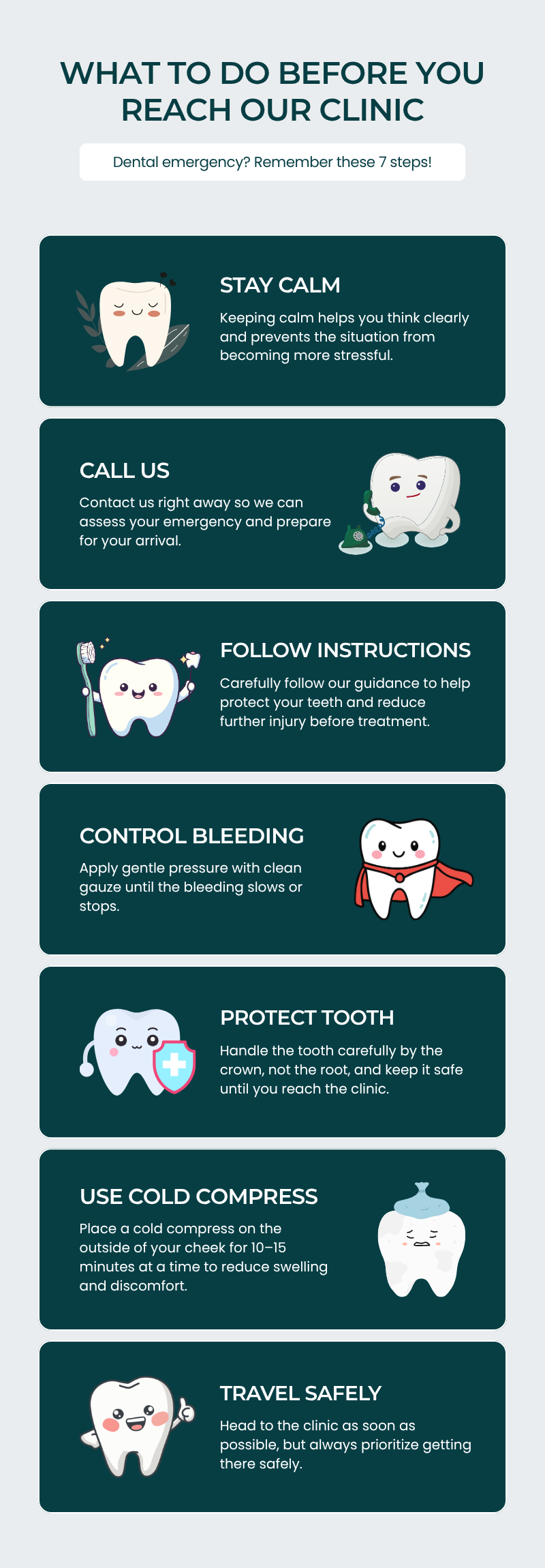
What to Do Before You Reach Our Clinic
The time between your dental emergency and your arrival at the clinic is important. While first aid won’t replace professional treatment, taking the right steps can help protect your oral health and prevent things from getting worse.
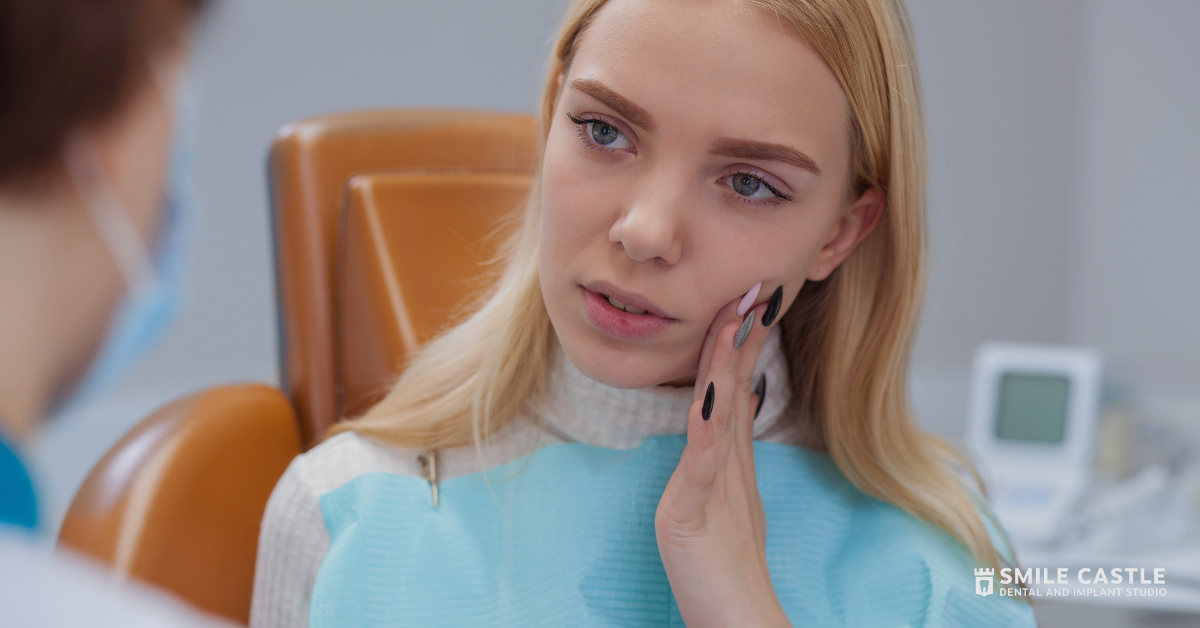
If You Have a Severe Toothache
A severe toothache can be caused by tooth decay, an infection, a cracked tooth, or inflammation inside the tooth. While the exact cause needs to be diagnosed by a dentist, there are several things you can safely do before you leave for your appointment.
- Rinse your mouth gently with warm water to remove any food particles or debris that may be causing the discomfort.
- Floss carefully around the painful tooth, as trapped food can sometimes cause pressure and irritation.
- If your face is swollen, place a cold compress on the outside of your cheek for 15–20 minutes at a time. This may help reduce swelling and give you temporary relief until you get here.
- If appropriate for you, an over-the-counter pain reliever may help with the discomfort until your appointment. Always follow the instructions on the label or your healthcare provider’s advice.
- One thing to avoid is placing aspirin on your gums. Although this is a common home remedy, aspirin can irritate or burn the soft tissues in your mouth without fixing the underlying problem.
- If your toothache is accompanied by swelling, fever, or a bad taste in your mouth, call the clinic immediately, as these symptoms may indicate an infection that needs to be treated urgently.
If You Knock Out a Permanent Tooth
A knocked-out permanent tooth is one of the few dental emergencies where every minute counts.
If your tooth has been knocked out:
- Pick it up by the crown, not the root.
- If it’s dirty, rinse it gently with clean water for only a few seconds. Do not scrub it or use soap.
- If possible, place the tooth back in its socket.
- If you can’t reinsert it, keep it moist by placing it in cold milk or a tooth preservation solution, if one is available.
- Get here as soon as you can.
Don’t wrap the tooth in tissue or let it dry out, as this can damage the living cells on the root that are needed for successful reattachment.
Did You Know?
A knocked-out permanent tooth has the best chance of being saved when professional treatment begins within 30 to 60 minutes of the injury.
If You Break or Crack a Tooth
A cracked or broken tooth may not always cause immediate pain, but that doesn’t mean it should be ignored.
Before you get here:
- Rinse your mouth with warm water.
- Save any broken pieces if you can find them.
- If bleeding occurs, apply clean gauze with gentle pressure.
- Use a cold compress to reduce swelling.
- Don’t chew on the injured side of your mouth.
Even a small crack can expose the inner layers of the tooth, making it more vulnerable to infection or further damage if left untreated.
If a Filling or Crown Falls Out
Losing a filling or crown can leave the affected tooth sensitive to hot, cold, or pressure.
Until you get here:
- Keep the area clean by gently brushing and rinsing.
- Avoid sticky or hard foods that may damage the exposed tooth.
- Chew on the opposite side of your mouth whenever possible.
Don’t try to reattach a crown with household glue or other adhesives. These products aren’t designed for use in the mouth and can interfere with proper treatment.
If You're Bleeding After a Dental Injury
Bleeding from the mouth can look scary, but many minor injuries respond well to basic first aid.
Before you get here:
- Place clean gauze over the bleeding area.
- Apply firm, continuous pressure for 10–15 minutes.
- Replace the gauze if needed without disturbing the clot unnecessarily.
- Use a cold compress to reduce swelling.
If the bleeding doesn’t slow or stop after 15 minutes of pressure, get medical attention rather than waiting for a dental appointment.
- Preserve Bone: Unlike removable dentures, implants stimulate the jawbone during chewing. This helps reduce bone loss, maintain bone volume, and preserve your facial structure over time.
- Restore Natural Function: Dental implants allow patients to chew, bite, and speak with confidence. Because they are securely fixed into the bone, they function like natural teeth.
- Protect Adjacent Teeth: Unlike some dental bridges, implants do not require reshaping adjacent teeth, helping preserve healthy tooth structure.
- Long-Term Solution: With proper home care and regular professional maintenance, dental implants may function for decades. Longevity varies based on individual health, oral hygiene, and other factors.
- Natural Appearance: Each implant restoration is custom-designed to match the colour, size, and shape of your existing teeth, creating a seamless and natural look.
If multiple teeth are missing, several implants may be used to support implant-supported bridges or other restorations. This allows your dentist to restore function while maintaining your bite, facial appearance, and oral health.
Full-Arch Tooth Replacement
| Feature | Porcelain Veneers | Composite Veneers |
|---|---|---|
| Appearance | Highly natural with excellent translucency | Natural-looking but slightly less lifelike |
| Durability | Generally more durable | Typically less durable |
| Treatment Time | Usually requires multiple visits | Often completed in one visit using layers of composite material hardened with a special light |
| Stain Resistance | Highly resistant to staining | More susceptible to staining over time |
| Repairability | Usually replaced if damaged | Often easier to repair, but may be damaged more easily |
| Typical Lifespan | Often 10–15 years or longer with proper care | Often needs replacement after five to eight years with proper maintenance |
What Not to Do Before Your Appointment
When you’re trying to manage pain or protect an injured tooth, it’s understandable to look for quick solutions. However, some common home remedies can actually make treatment more difficult.
Before you get here, avoid:
- Don’t wait several hours or days, hoping the problem will resolve on its own.
- Don’t touch the root of a knocked-out tooth.
- Don’t scrub or disinfect a knocked-out tooth with alcohol or soap.
- Don’t place aspirin directly on your gums.
- Don’t use household glue to repair a broken tooth or reattach a crown.
- Don’t apply heat to facial swelling unless instructed by a healthcare professional.
- Don’t continue to chew on a broken or painful tooth.
When in doubt, the best thing to do is to protect the area and call your dental team for guidance.
- Preserve Bone: Unlike removable dentures, implants stimulate the jawbone during chewing. This helps reduce bone loss, maintain bone volume, and preserve your facial structure over time.
- Restore Natural Function: Dental implants allow patients to chew, bite, and speak with confidence. Because they are securely fixed into the bone, they function like natural teeth.
- Protect Adjacent Teeth: Unlike some dental bridges, implants do not require reshaping adjacent teeth, helping preserve healthy tooth structure.
- Long-Term Solution: With proper home care and regular professional maintenance, dental implants may function for decades. Longevity varies based on individual health, oral hygiene, and other factors.
- Natural Appearance: Each implant restoration is custom-designed to match the colour, size, and shape of your existing teeth, creating a seamless and natural look.
If multiple teeth are missing, several implants may be used to support implant-supported bridges or other restorations. This allows your dentist to restore function while maintaining your bite, facial appearance, and oral health.
Full-Arch Tooth Replacement
Limitations
Getting Ready to Come to the Clinic
Once you’ve called the office, here are a few things you can do before you leave home to make your appointment go more smoothly.
If possible:
- Bring any broken tooth fragments with you.
- Bring a knocked-out tooth stored correctly in cold milk or a tooth preservation solution.
- Make a list of any medications you’re taking if you don’t already have one.
- Bring your dental insurance information, if applicable.
- Continue to use a cold compress during your trip if you’ve been advised to do so.
- If you’ve taken medication that makes you drowsy or you’re experiencing significant facial trauma, have someone else drive you.
These small steps can help the team assess your condition more quickly when you get here.
- Preserve Bone: Unlike removable dentures, implants stimulate the jawbone during chewing. This helps reduce bone loss, maintain bone volume, and preserve your facial structure over time.
- Restore Natural Function: Dental implants allow patients to chew, bite, and speak with confidence. Because they are securely fixed into the bone, they function like natural teeth.
- Protect Adjacent Teeth: Unlike some dental bridges, implants do not require reshaping adjacent teeth, helping preserve healthy tooth structure.
- Long-Term Solution: With proper home care and regular professional maintenance, dental implants may function for decades. Longevity varies based on individual health, oral hygiene, and other factors.
- Natural Appearance: Each implant restoration is custom-designed to match the colour, size, and shape of your existing teeth, creating a seamless and natural look.
If multiple teeth are missing, several implants may be used to support implant-supported bridges or other restorations. This allows your dentist to restore function while maintaining your bite, facial appearance, and oral health.
Full-Arch Tooth Replacement
| Timeline | What to Do |
|---|---|
| Day of surgery | Rest, manage bleeding, and use ice packs. |
| First 24 hours | Protect the surgical site and follow aftercare instructions. |
| Days 2-7 | Continue gentle oral hygiene and eat soft foods. |
| Week 2 | Swelling and discomfort continue to improve. |
| Week 3-8 | Ongoing bone healing and routine follow up visits. |
| Long-term | Maintain excellent oral hygiene and regular dental checkups. |
What to Do Before Leaving for the Clinic
| Situation | What You Should Do | Avoid Doing |
|---|---|---|
| Severe toothache | Rinse with warm water, floss gently, call the clinic | Placing aspirin directly on the gums |
| Knocked-out tooth | Handle by the crown and keep it moist in milk | Touching or scrubbing the root |
| Broken tooth | Save the fragments and avoid chewing on that side | Ignoring the injury because it isn't painful |
| Lost filling or crown | Keep the area clean and avoid sticky foods | Using household glue to reattach it |
| Bleeding | Apply clean gauze with firm pressure | Removing the gauze repeatedly to check the wound |
- Preserve Bone: Unlike removable dentures, implants stimulate the jawbone during chewing. This helps reduce bone loss, maintain bone volume, and preserve your facial structure over time.
- Restore Natural Function: Dental implants allow patients to chew, bite, and speak with confidence. Because they are securely fixed into the bone, they function like natural teeth.
- Protect Adjacent Teeth: Unlike some dental bridges, implants do not require reshaping adjacent teeth, helping preserve healthy tooth structure.
- Long-Term Solution: With proper home care and regular professional maintenance, dental implants may function for decades. Longevity varies based on individual health, oral hygiene, and other factors.
- Natural Appearance: Each implant restoration is custom-designed to match the colour, size, and shape of your existing teeth, creating a seamless and natural look.
If multiple teeth are missing, several implants may be used to support implant-supported bridges or other restorations. This allows your dentist to restore function while maintaining your bite, facial appearance, and oral health.
Full-Arch Tooth Replacement
- Preserve Bone: Unlike removable dentures, implants stimulate the jawbone during chewing. This helps reduce bone loss, maintain bone volume, and preserve your facial structure over time.
- Restore Natural Function: Dental implants allow patients to chew, bite, and speak with confidence. Because they are securely fixed into the bone, they function like natural teeth.
- Protect Adjacent Teeth: Unlike some dental bridges, implants do not require reshaping adjacent teeth, helping preserve healthy tooth structure.
- Long-Term Solution: With proper home care and regular professional maintenance, dental implants may function for decades. Longevity varies based on individual health, oral hygiene, and other factors.
- Natural Appearance: Each implant restoration is custom-designed to match the colour, size, and shape of your existing teeth, creating a seamless and natural look.
If multiple teeth are missing, several implants may be used to support implant-supported bridges or other restorations. This allows your dentist to restore function while maintaining your bite, facial appearance, and oral health.
Full-Arch Tooth Replacement
A Few Ways to Reduce Your Risk of Dental Emergencies
While accidents can’t be prevented, healthy habits can reduce your risk of future dental emergencies.
You can help protect your smile by:
- Wearing a mouthguard during contact sports.
- Avoiding chewing ice, popcorn kernels, and other hard objects.
- Never using your teeth to open packaging.
- Keeping up with regular dental checkups.
- Addressing small cavities or cracked teeth before they become bigger problems.
For more evidence-based information on dental emergencies and oral health, visit the
Canadian Dental Association for patient education resources.
Frequently Asked Questions
Should I call the dental clinic before leaving for a dental emergency?
Yes, calling first allows the dental team to assess your symptoms, give you first-aid instructions, prepare for your arrival, and advise whether you should come to the clinic or go to the emergency room instead.
What should I bring to my emergency dental appointment?
If possible, bring any broken pieces of your tooth, a knocked-out tooth stored correctly, your list of medications, ID, and dental insurance information. These will help your appointment go more smoothly.
Can I eat before going to an emergency dentist?
It depends on your injury. If chewing hurts or you’ve injured a tooth, it’s best to avoid eating hard or sticky foods until you’ve been assessed. Follow any instructions given by the dental team.
What should I do during the drive to the clinic?
Continue to apply a cold compress if told to do so, don’t touch the injured area, and protect any knocked-out or broken tooth by transporting it properly. If you’re in severe pain or have taken medication that makes you drowsy, have someone else drive.
How quickly should I see an emergency dentist in Chilliwack?
As soon as possible. Prompt treatment can reduce pain, prevent complications, and save a damaged or knocked-out tooth. If you’re not sure whether your situation is urgent, call the dental clinic.
Your First Response Can Make a Difference
A dental emergency can be overwhelming, but knowing what to do before you get here can help you feel more in control. Whether you have severe tooth pain, a broken tooth, or a knocked-out permanent tooth, taking the right first-aid steps and avoiding common mistakes can help protect your oral health until you get here.
If you ever need an
emergency dentist in Chilliwack, remember to act fast, follow the instructions, and bring what you can.
Ready to schedule your appointment?
Reach out to your trusted dentist in Chilliwack today. Now accepting new patients!
SHARE THIS
Latest Posts