
What Happens During Your First Dental Visit in Chilliwack?
By Bhavesh Gabani • September 25, 2026

Going to a new dentist can be nerve-wracking. What will the dentist do? Will you get X-rays? Will your teeth be cleaned? And what if the dentist finds a problem?
Knowing what to expect can make it feel more manageable. Your
first dental visit in Chilliwack is an opportunity for your dental team to learn about you, hear your concerns, assess your teeth and gums, and establish a baseline for your ongoing oral care. The appointment can vary depending on your age, dental history, symptoms, oral health, and individual needs. Here’s what you can expect.
QUICK ANSWER
What Happens at Your First Dental Visit in Chilliwack?
A first dental visit in Chilliwack usually starts with a review of your medical and dental history, followed by an exam of your teeth, gums, bite, jaw, and other areas of your mouth. Your dentist may recommend digital X-rays if needed to better understand your oral health. After the exam, your dentist will go over the findings with you and tell you if you need preventive care, monitoring, or treatment. Depending on your needs and the appointment, a
professional dental cleaning may also be done.
In this article:
- Before Your Appointment: What Should You Bring
- What Happens During Your First Dental Visit?
- Will You Get a Cleaning at Your First Appointment?
- Understanding Your Exam Results and Next Steps
- First Dental Visit at a Glance
- What If You Feel Nervous About Your First Visit?
- What Happens After Your First Visit?
- Frequently Asked Questions About Your First Dental Visit in Chilliwack
- Feeling Prepared for Your First Dental Appointment
Before Your Appointment: What Should You Bring?
Bring a few things with you, and your first appointment will go smoothly. It also gives your dental team the information they need to understand your health and provide care appropriate to your situation.
For your first dental appointment, you may want to bring:
- Photo identification
- Dental insurance or Canadian Dental Care Plan (CDCP) information, if applicable
- Information about medications and supplements you currently take
- Details of allergies and relevant medical conditions
- Previous dental records or X-rays, if available
- Information about current dental symptoms or concerns
Think of any questions you may have. For example, you may want to talk about tooth sensitivity, bleeding gums, discomfort when chewing, changes in your teeth, or concerns about previous dental work. Your medical history is also relevant, as certain health conditions, medications, allergies, and previous procedures can affect dental treatment decisions.
If you get anxious about dental appointments, consider mentioning this when you book or when you arrive. This gives the dental team a chance to understand your concerns and discuss ways to make the appointment more comfortable.
What Happens During Your First Dental Visit?
Every patient is different, but a first appointment usually follows several stages. Knowing what happens during each one and why can make the process easier to follow.
Step 1: Registration and Health History
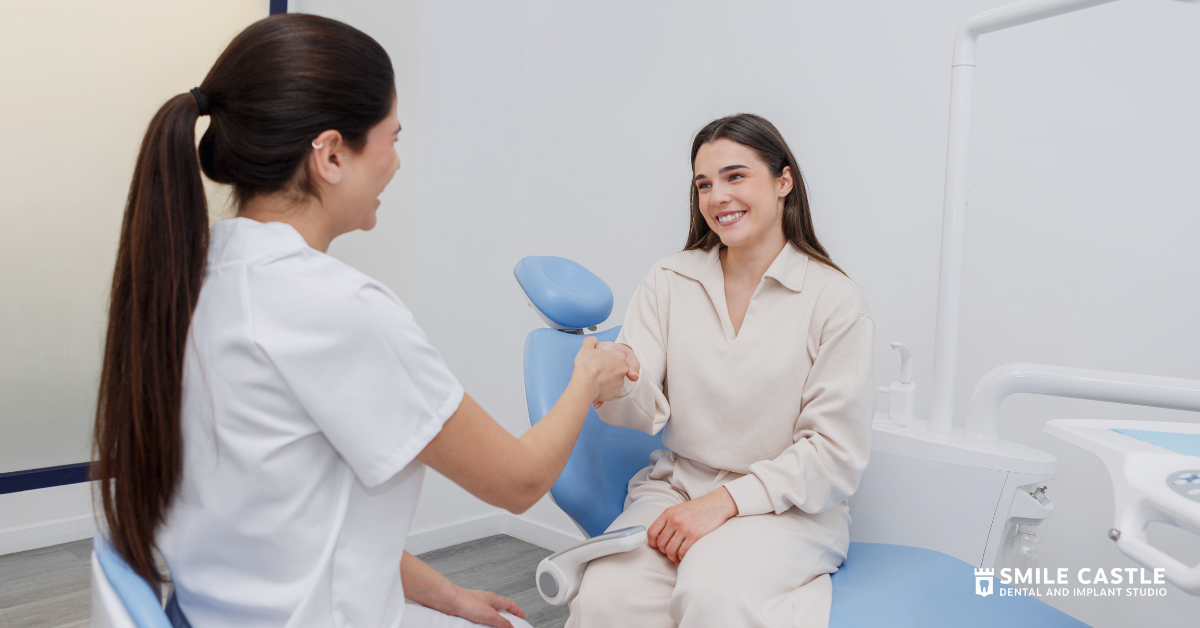
Your visit usually starts with registration and a review of your medical and dental history. You may be asked about medications, allergies, medical conditions, previous dental procedures, and any problems you are currently experiencing. Your dentist may also ask about your dental habits and when you last had dental care.
This information provides important context for your exam and helps your dental team make decisions about your care. This is also a good time to explain what brought you to the dentist. Even if you don’t have pain or an obvious problem, mention any concerns you have, such as sensitivity, changes in your gums, difficulty chewing, or anything unusual you’ve noticed.
Step 2: Comprehensive Dental Examination
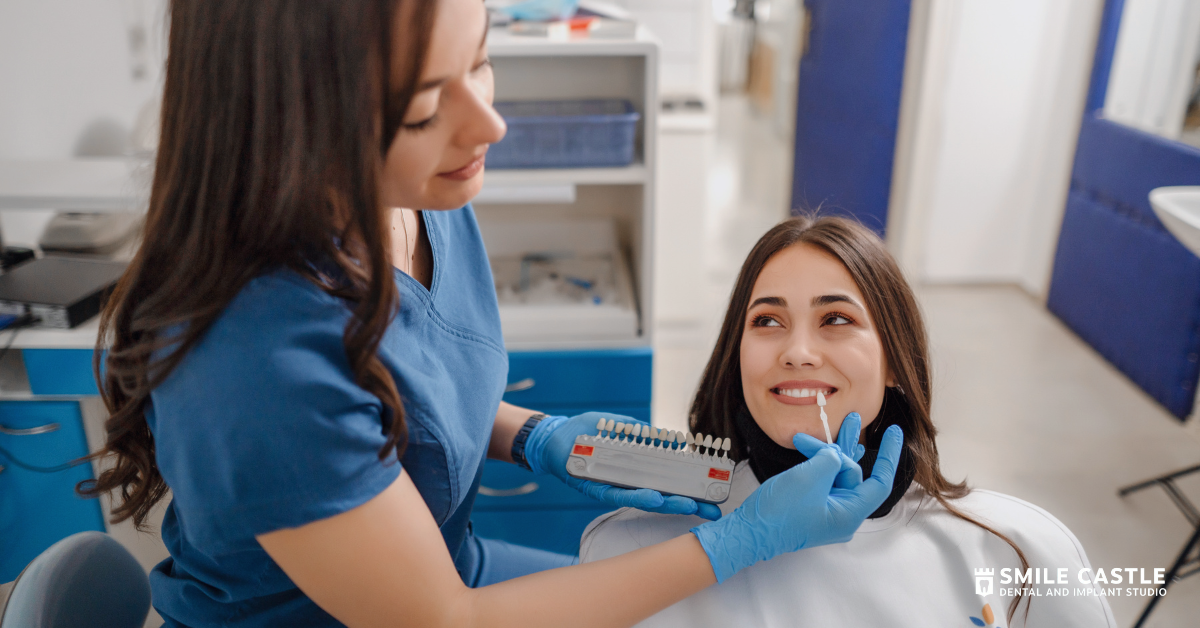
Next, your dentist will assess your current oral health. A comprehensive exam may include checking your teeth, gums, bite, jaw, and other areas of your mouth. Your dentist may look for problems such as tooth decay, damaged teeth, gum problems, and issues with your bite. Existing dental work, including fillings or crowns, may also be examined.
An exam can identify changes or concerns that may not be obvious to you and establishes a baseline for future appointments. For more patient information, the
Canadian Dental Association’s guidelines on dental exams explain what may be checked during a dental exam.
Step 3: Dental X-Rays, If Needed
You may also have digital dental X-rays taken during your first appointment, but X-rays are not necessary for every patient at every visit. Your dentist will consider factors such as your dental history, symptoms, previous X-rays, current oral health, and findings from the clinical exam.
X-rays can show areas that cannot be seen by looking inside the mouth. If X-rays are recommended and you’re not sure why, ask your dentist to explain what the images will show and how they relate to your exam.
Will You Get a Cleaning at Your First Appointment?
Maybe, but a cleaning should not be assumed to be part of every first appointment. A professional dental cleaning removes plaque and tartar that regular brushing and flossing may not get rid of. Your dental hygienist will also give you advice on how to care for your teeth and gums at home.
Not all patients have the same oral health needs, so your dentist and hygienist will first need to assess your gums and overall oral health to determine what type of hygiene care is needed. As a result, your first visit may include a cleaning, or hygiene care may be scheduled for another appointment.
Understanding Your Exam Results and Next Steps
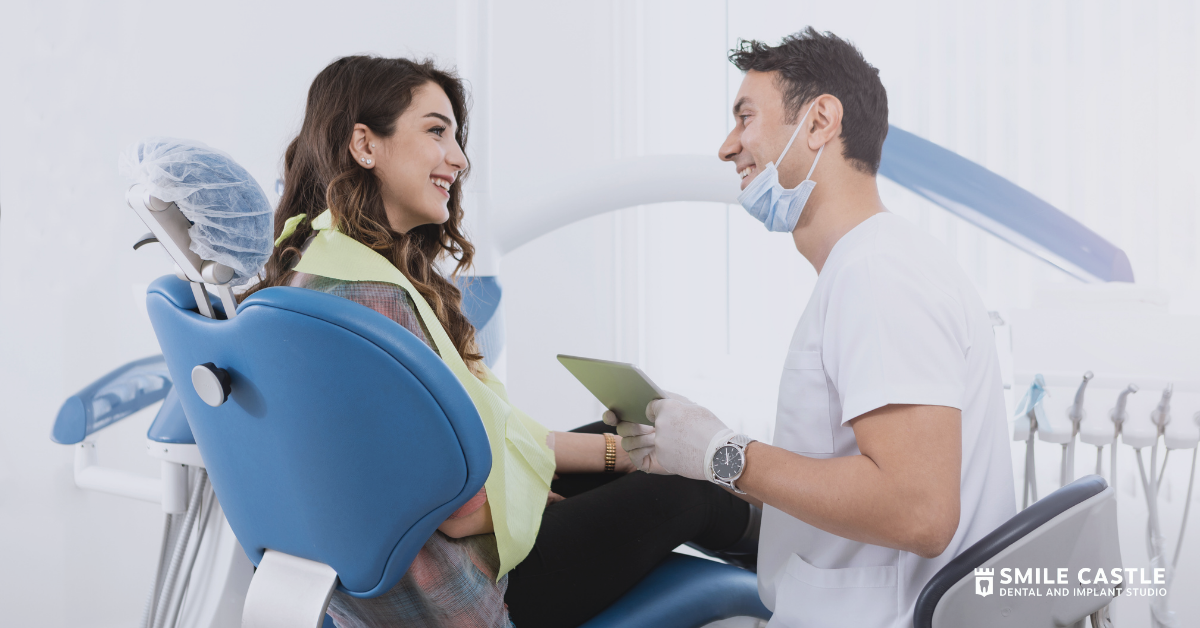
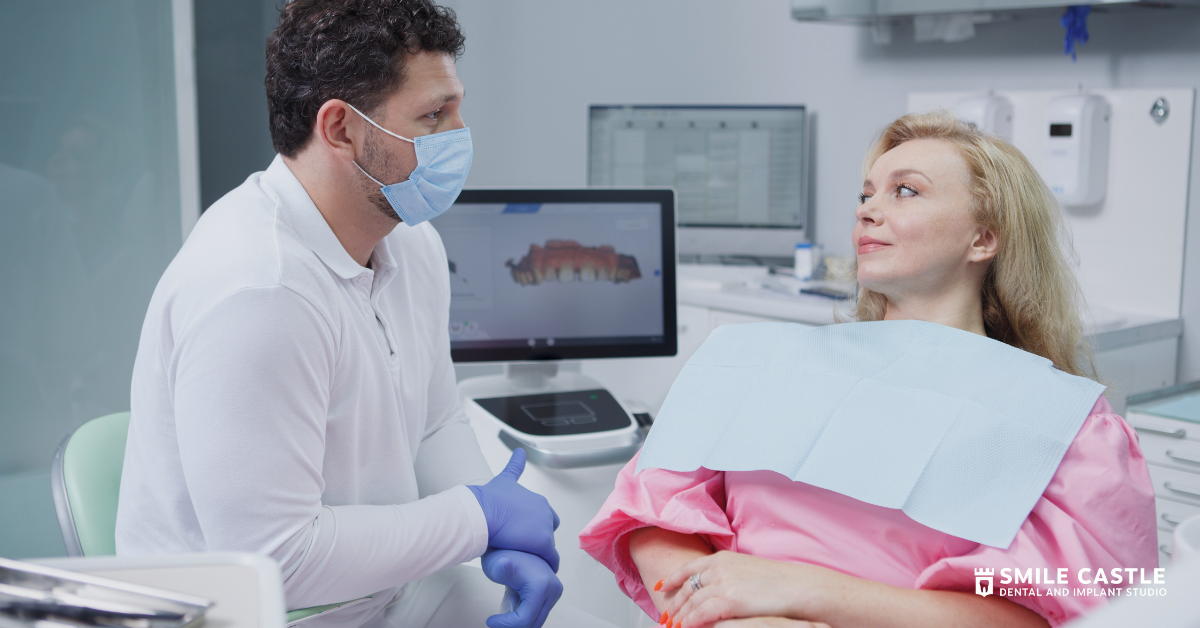
One of the best parts of a first dental visit happens after the exam: discussing what the dentist found. Your dentist should explain your oral health findings in a way you can understand, including what’s healthy, what to monitor, and what needs treatment.
If treatment is recommended, you may want to ask:
- What the dentist found
- Why treatment is being recommended
- How urgent the concern is
- Available treatment options
- What may happen if treatment is postponed
- Preventive steps that may help protect your oral health
- Relevant scheduling, cost, or insurance considerations
Depending on the findings, this may lead to an individualized treatment plan. It’s also your chance to ask questions. If something is unclear, ask the dentist to explain it differently. Understanding why care is being recommended and what alternatives are available can help you make decisions about your oral health.
First Dental Visit at a Glance
The exact sequence of a first appointment can vary, but the following provides a useful overview:
| Part of the Visit | What May Happen | Why It Matters |
|---|---|---|
| Registration | Medical and dental history is reviewed | Helps the dental team provide safe, individualized care |
| Dental examination | Teeth, gums, bite, jaw, and other areas of the mouth are assessed | Establishes your current oral health status |
| Digital X-rays | Images are taken when clinically appropriate | Can provide information about areas not adequately visible during the examination |
| Dental cleaning | Cleaning may be performed depending on your needs | Helps manage plaque and tartar and supports preventive care |
| Results discussion | The dentist explains findings and answers questions | Helps you understand your oral health |
| Treatment planning | Appropriate options and next steps are discussed | Helps you make informed decisions about future care |
Not every patient will need every step during the same appointment. Your dental team can explain what is appropriate based on your individual situation.
What If You Feel Nervous About Your First Visit?
Feeling anxious about a new dentist is normal. Previous dental experiences, fear of discomfort, uncertainty about treatment, or just not knowing what will happen can all contribute to anxiety. Tell your dental team if you’re nervous so they can better understand your concerns.
You can also ask the dentist to explain what will happen before they start an exam or procedure. If helpful, agree on a simple hand signal that means you want the dentist or hygienist to stop. Asking questions when something is unclear and communicating your concerns can also help the dental team adjust where possible.
What Happens After Your First Visit?
What happens next depends on your exam results. If your mouth is healthy, your next step may be ongoing preventive care and future dental exams. Your dental team may also give you personalized recommendations for brushing, flossing, or other home-care habits.
If the dentist finds an area of concern, the next step may be to monitor it or schedule further assessment or treatment. More complex issues may require additional diagnostic information before a treatment plan is finalized. There is no one-size-fits-all follow-up schedule, as the frequency of dental exams and hygiene care depends on your current oral health, risk factors, and individual needs.
Frequently Asked Questions About Your First Dental Visit in Chilliwack
1. How long does a first dental visit in Chilliwack take?
A first dental appointment may take around 60 to 90 minutes but can vary. Your medical and dental history, exam, questions, X-rays, and whether hygiene care is provided can all impact the appointment time.
2. Do I need dental X-rays at my first appointment?
Not necessarily. The need for X-rays depends on your oral health, symptoms, dental history, existing records, and findings during the clinical exam. If X-rays are recommended, your dentist can explain why they may be helpful in your situation.
3. Will my teeth be cleaned during my first visit?
They may be. Whether a cleaning is done during the first appointment depends on your individual oral health and how the dental office schedules new-patient care. Your dental team may need to assess your teeth and gums first to determine what type of hygiene care is needed.
4. What should I tell my dentist during my first appointment?
Tell your dentist about current dental concerns or symptoms, medical conditions, medications, allergies, and previous dental experiences. It’s also good to discuss dental anxiety and any oral health goals you have. Providing information helps your dentist understand your individual needs.
5. What happens if the dentist finds a problem during my first visit?
Finding a problem doesn’t mean treatment has to happen right away. Your dentist should explain what was found, if it needs to be monitored or treated, and what options are available. If treatment is recommended, you can ask why, when, what the alternatives are, and other considerations before deciding what to do.
Feeling Prepared for Your First Dental Appointment
Your first dental visit in Chilliwack is to get a baseline of your oral health. The appointment may include reviewing your medical and dental history, an exam, digital X-rays if needed, hygiene care, and discussion of findings. Knowing what to expect helps you prepare information and questions and take a more active role in your dental care.
At Smile Castle Dental and Implant Studio, new patients in Chilliwack can expect a personalized approach to understanding their dental needs and what to do next.
Ready to schedule your appointment?
Reach out to your trusted dentist in Chilliwack today. Now accepting new patients!
SHARE THIS