

The Complete Dental Implant Process: What Chilliwack Patients Can Expect
By Bhavesh Gabani • September 18, 2026

If you are considering a dental implant, you may wonder how the process works, how long healing takes, and when you will receive your new tooth. Getting dental implants in Chilliwack typically involves several stages, including an assessment and treatment plan, implant placement, healing, and the final restoration. Some patients may also need preparatory treatment. Knowing these steps can help you understand what to expect throughout the process.
QUICK ANSWER
What Is the Dental Implant Process in Chilliwack?
The process for getting dental implants in Chilliwack generally begins with a comprehensive dental examination, diagnostic imaging, and personalized treatment planning. If you are a suitable candidate, the implant is surgically placed into the jawbone and given time to heal and integrate with the surrounding bone before an abutment and custom replacement tooth are attached. Some patients may require additional procedures, such as a tooth extraction or bone graft, so the exact steps and overall treatment timeline can vary based on individual needs.
In This Article:
- Understanding the Dental Implant Process
- Your Dental Implant Consultation and Assessment
- Preparing the Mouth for Implant Placement
- Placing the Dental Implant
- Healing and Osseointegration
- Adding the Abutment and Final Tooth
- How Long Does the Dental Implant Process Take
- What Should You Expect During Recovery
- Caring for Your Implant After Treatment
- Frequently Asked Questions
- What to Expect From the Dental Implant Process
Understanding the Dental Implant Process
Dental implant treatment typically involves several stages, beginning with a consultation and assessment to determine the right treatment plan. If needed, preparatory procedures such as tooth extraction or bone grafting may be completed before the implant is placed in the jawbone. After a period of healing, the implant can support the final replacement tooth. The exact process and timeline vary depending on factors such as oral health, available jawbone, and the number and location of missing teeth.
The following sections walk through each stage so you can better understand what to expect when considering dental implants in Chilliwack.
Step 1: Your Dental Implant Consultation and Assessment
The first stage is determining whether an implant is an appropriate option for your individual situation. Your dentist will typically review your dental and relevant medical history and examine your teeth, gums, bite, and the area where the tooth is missing. The health and amount of bone at the proposed implant site also need to be considered.
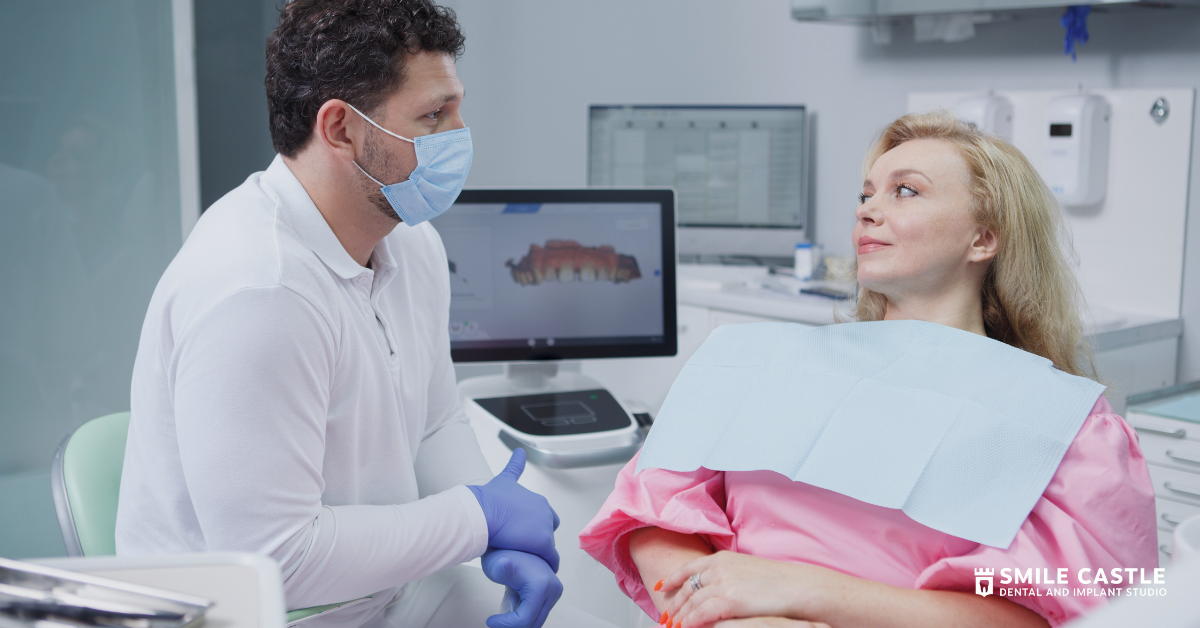
Imaging is an important part of this assessment. Dental X-rays can reveal information about the teeth and supporting bone that cannot always be seen during a visual examination. HealthLink BC notes that dental X-rays are also used when planning dental implants and dentures.
Smile Castle Dental and Implant Studio describes the use of 3D imaging in its implant assessment and planning process, as well as computer-guided implant surgery. Three-dimensional imaging can give the dentist additional information about the jaw and surrounding anatomical structures when this type of imaging is indicated.
Step 2: Preparing the Mouth for Implant Placement
Not everyone moves directly from the consultation to implant placement. If there are active oral health concerns, these may need to be addressed first. For example, gum health is important because the tissues and bone surrounding an implant need to provide a healthy foundation.
If the tooth being replaced is still present but cannot be retained, an extraction may also form part of the treatment plan. Depending on the circumstances, the area may need time to heal before implant placement. Another consideration is the amount of available jawbone. If there is not enough suitable bone to support the planned implant, bone grafting may be recommended to help prepare the site.
Step 3: Placing the Dental Implant
Once the site is ready, the implant can be placed. Local anesthesia is generally used to numb the treatment area. The dentist then prepares the planned site in the jawbone and carefully positions the implant according to the treatment plan. The area is subsequently protected or closed as appropriate for the procedure.
Smile Castle Dental and Implant Studio states that its approach includes 3D-guided implant placement. The specific planning and placement approach used for an individual patient will depend on the clinical situation.
After the procedure, you will receive instructions for looking after the area while it begins to heal. Temporary tenderness and swelling can occur after implant placement. Some patients may also notice minor bleeding or need to modify what they eat for a short period. Recovery experiences differ, so your own dentist's postoperative instructions should take priority over general advice found online.
Step 4: Healing and Osseointegration
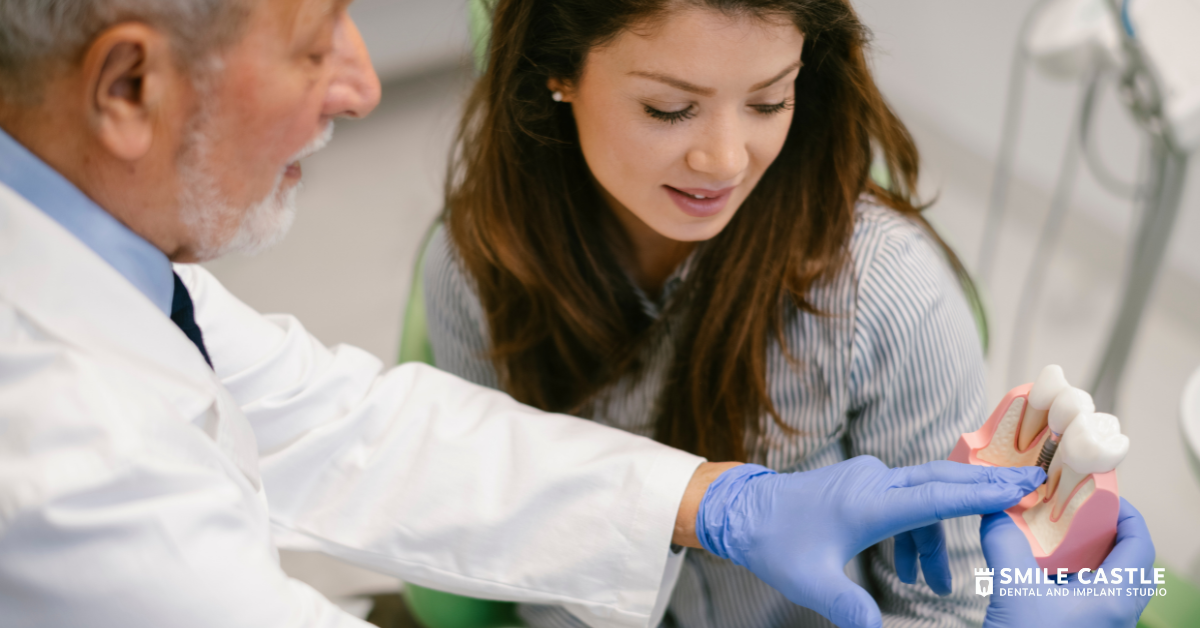
Placing the implant is only one part of the process. The next stage happens gradually inside the jaw. This process is called osseointegration. In simple terms, the surrounding bone heals around and integrates with the implant, helping create the stable foundation needed to support a replacement tooth.
One important point is that initial recovery and osseointegration are not the same thing. Your mouth may begin feeling considerably better relatively soon after implant placement, but that does not necessarily mean the implant is ready to support its final restoration. Bone healing takes longer than the initial recovery from the procedure.
For that reason, the healing phase can last for several months in some cases. Follow-up appointments allow the dental team to monitor the site and determine when it is appropriate to move to the restorative stage. Individual healing, bone quality, implant location, and other clinical factors can all affect this part of the timeline.
Step 5: Adding the Abutment and Final Tooth
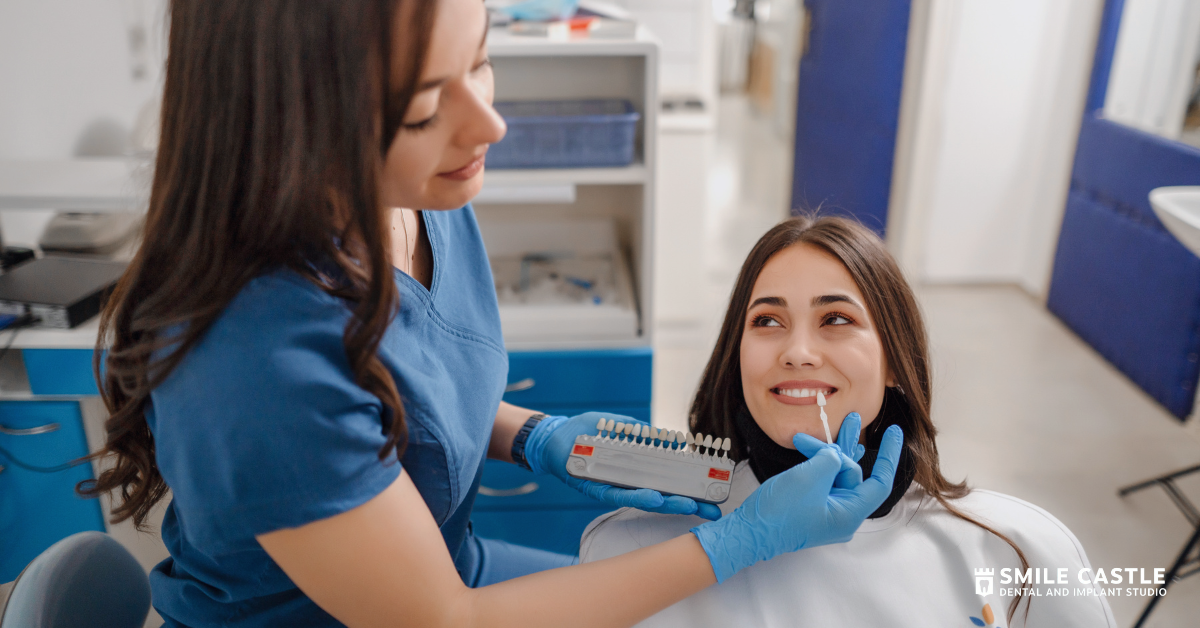
Once your dentist is satisfied with the implant's healing and stability, treatment can progress toward the visible replacement tooth. An abutment is used to connect the implant with the restoration. Impressions, scans, or other records may then be taken to help create a restoration appropriate for your mouth.
For a single missing tooth, this usually means an implant-supported crown. The crown is planned with factors such as fit, bite, function, and appearance in mind. When several teeth are missing, implants may instead support a bridge or denture. Smile Castle Dental and Implant Studio provides implant treatment for single missing teeth as well as multiple-tooth and full-arch situations. The restorative stage may require more than one appointment. Your dental team can explain what will be involved based on the type of restoration you are receiving.
How Long Does the Dental Implant Process Take?
There is no single treatment timeline that applies to everyone getting dental implants in Chilliwack. A relatively straightforward case can follow a different schedule from one involving an extraction, bone graft, multiple implants, or a more complex restoration. Healing also varies from person to person.
The table below provides a general overview rather than a fixed treatment schedule.
| Stage | What Happens | What Can Affect Timing? |
|---|---|---|
| Consultation | Examination, imaging, and treatment planning | Diagnostic and treatment needs |
| Preparation | Extraction, gum treatment, or grafting if required | Healing and available bone |
| Implant placement | Implant is positioned in the jaw | Implant location and case complexity |
| Osseointegration | Bone heals and integrates around the implant | Individual healing and bone quality |
| Restoration | Abutment and replacement tooth are completed | Healing progress and type of restoration |
| Maintenance | Ongoing hygiene and dental examinations | Individual oral health needs |
The key point is that implant treatment is guided partly by biology. Trying to compare your timeline with someone else's may therefore be misleading. Your treatment plan should provide a more useful estimate based on your oral health, anatomy, and the procedures your particular case requires.
What Should You Expect During Recovery?
After implant placement, following your postoperative instructions can help support the healing process. You may be advised to choose softer foods initially and avoid disturbing the surgical area. You will also receive guidance on keeping your mouth clean while protecting the healing site.
If medication has been prescribed or recommended, follow the directions provided by your dental professional. You should also attend scheduled follow-up visits so the implant site can be monitored. Certain activities or habits may need to be temporarily avoided during recovery. Your dental team will provide instructions relevant to your particular procedure.
Some discomfort or swelling can occur following implant surgery, but symptoms should be monitored. Contact your dental office if you experience symptoms that are unexpected, become worse rather than better, or otherwise concern you. Individualized professional advice is more appropriate in these situations than trying to diagnose the problem yourself.
Caring for Your Implant After Treatment
Receiving the final restoration does not mean that your implant no longer requires attention. Good daily oral hygiene remains important. This generally includes brushing thoroughly and cleaning between teeth and around the implant using methods recommended by your dental team.
Regular dental examinations and professional hygiene appointments also allow the implant, restoration, bite, gums, and surrounding tissues to be monitored over time. HealthLink BC similarly emphasizes regular brushing, flossing, dental examinations, and professional cleaning as part of ongoing oral healthcare.
An implant itself cannot develop a cavity in the way a natural tooth can. However, plaque accumulation and inflammation can affect the gums and supporting tissues around an implant, which is why ongoing maintenance matters.
Frequently Asked Questions
1. Is getting a dental implant painful?
Local anesthesia is generally used during implant placement to numb the treatment area. Afterward, temporary tenderness, swelling, and discomfort can occur as the area begins healing. Experiences vary between patients, and your dental team can explain what to expect based on your procedure and provide appropriate postoperative instructions.
2. How long does it take to get a dental implant from start to finish?
The process often takes several months because time is needed for the implant to integrate with the jawbone before the final restoration is completed. Your treatment could take longer if an extraction, bone graft, or another preparatory procedure is necessary. Your individual healing response also affects timing.
3. Does everyone need a bone graft before an implant?
No. Bone grafting is considered when there is not enough suitable bone to support the planned implant. Clinical assessment and appropriate imaging help your dentist evaluate the proposed implant site and determine whether grafting should form part of your treatment plan.
4. Can I get a temporary tooth while my dental implant heals?
A temporary replacement may be possible in some situations, but it is not appropriate for every case. Options can depend on factors such as the location of the missing tooth, implant stability, your bite, appearance requirements, and the overall treatment plan. Ask your dentist what you can expect to use, if anything, during the healing period.
5. How long do dental implants last?
Dental implants are intended as a long-term tooth-replacement option, but it is not possible to guarantee exactly how long an individual implant will last. Longevity can be influenced by oral hygiene, the health of the surrounding gums and bone, professional maintenance, general health factors, habits, and the forces placed on the implant and restoration.
What to Expect From the Dental Implant Process
The dental implant process typically includes an assessment and treatment plan, any necessary preparation, implant placement, healing and osseointegration, and placement of the final restoration. For patients considering dental implants in Chilliwack, understanding these stages can help set realistic expectations about treatment and timing. At Smile Castle Dental and Implant Studio, implant care is tailored to each patient and may include 3D imaging and computer-guided technology where appropriate. Schedule a consultation with our team to learn whether dental implants are right for you and what your treatment and timeline may involve.
Ready to schedule your appointment?
Reach out to your trusted dentist in Chilliwack today. Now accepting new patients!
SHARE THIS
Latest Posts